Antibacterial splashback coating: myth or real function
Silver, copper, zinc ions in coatings. What actually works in a kitchen and is the premium worth it.
"Antibacterial coating" is a marketing favourite. Manufacturers claim "99.9% reduction." What's actually happening, and do you need it.
01Tech
Silver ions (Ag+). Most common. Micro-particles embedded in upper glass layer damage bacterial membranes. 8–10 year life, doesn't wash out.
Copper alloy. Effective broad-spectrum including viruses. May show slight pink tint.
Zinc ions (Zn+). Less effective than silver, half the price. Strong against mould.
02ISO 22196 lab results
| Tech | E. coli reduction 24h | Salmonella |
|---|---|---|
| Silver (Pilkington Antibacterial) | 99.9% | 99.5% |
| Copper | 99.9% | 99.9% |
| Zinc | 92% | 88% |
| Untreated control | 0% | 0% |
032026 prices (premium over standard)
- Silver (Pilkington): +4 800 ₽/m²
- Copper (Sterilizes Cu): +6 200 ₽/m²
- Zinc (EU standard): +2 800 ₽/m²
04Where it actually helps
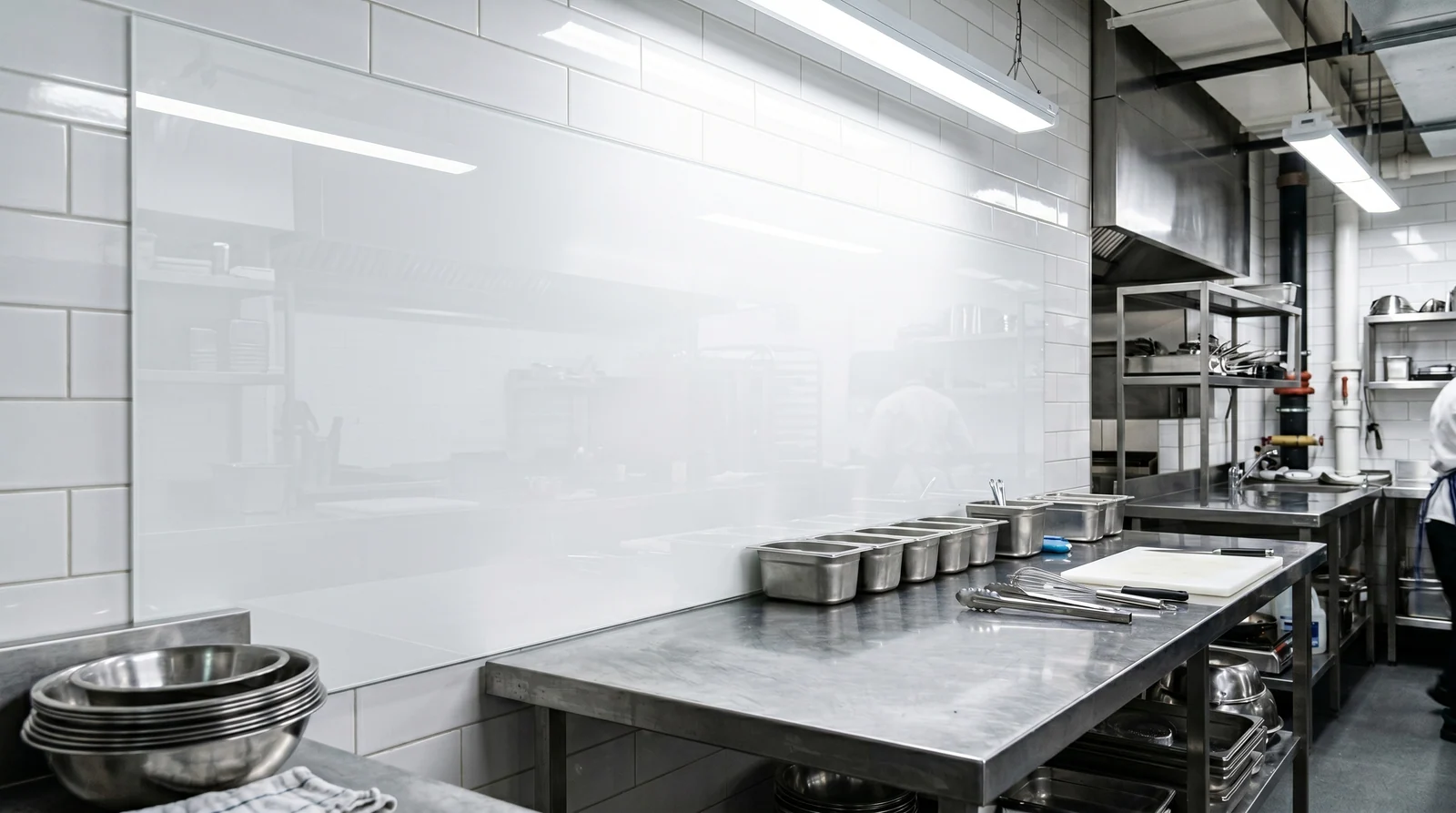
- Commercial kitchens — mandatory per SanPiN 2.3.2 (food service)
- Hospital kitchens
- Families with kids under 3
- Allergy / asthma households
Coating is a helper, not a replacement for cleaning. If you don't wipe the splashback for a week, silver won't fight greasy bacterial film. It works on a clean surface, accelerating natural disinfection.
For restaurants in Russia — required by SanPiN 2.3.2; 30 000 ₽ fine without it. Certificate included.
05This service at REAL GLASS
If you've read this far, the topic is probably relevant to a real project. We make glass splashbacks in-house in St. Petersburg, with a measure within 1–3 days, 1-year warranty and a fixed contract price. All numbers in this article come from our actual 2026 quotes.
For a project-specific estimate — see the service page or request a free on-site measure.