Smart Glass floor with PDLC: tech and applications
A floor that switches transparent-to-opaque on a button. Where it works, 2026 cost.
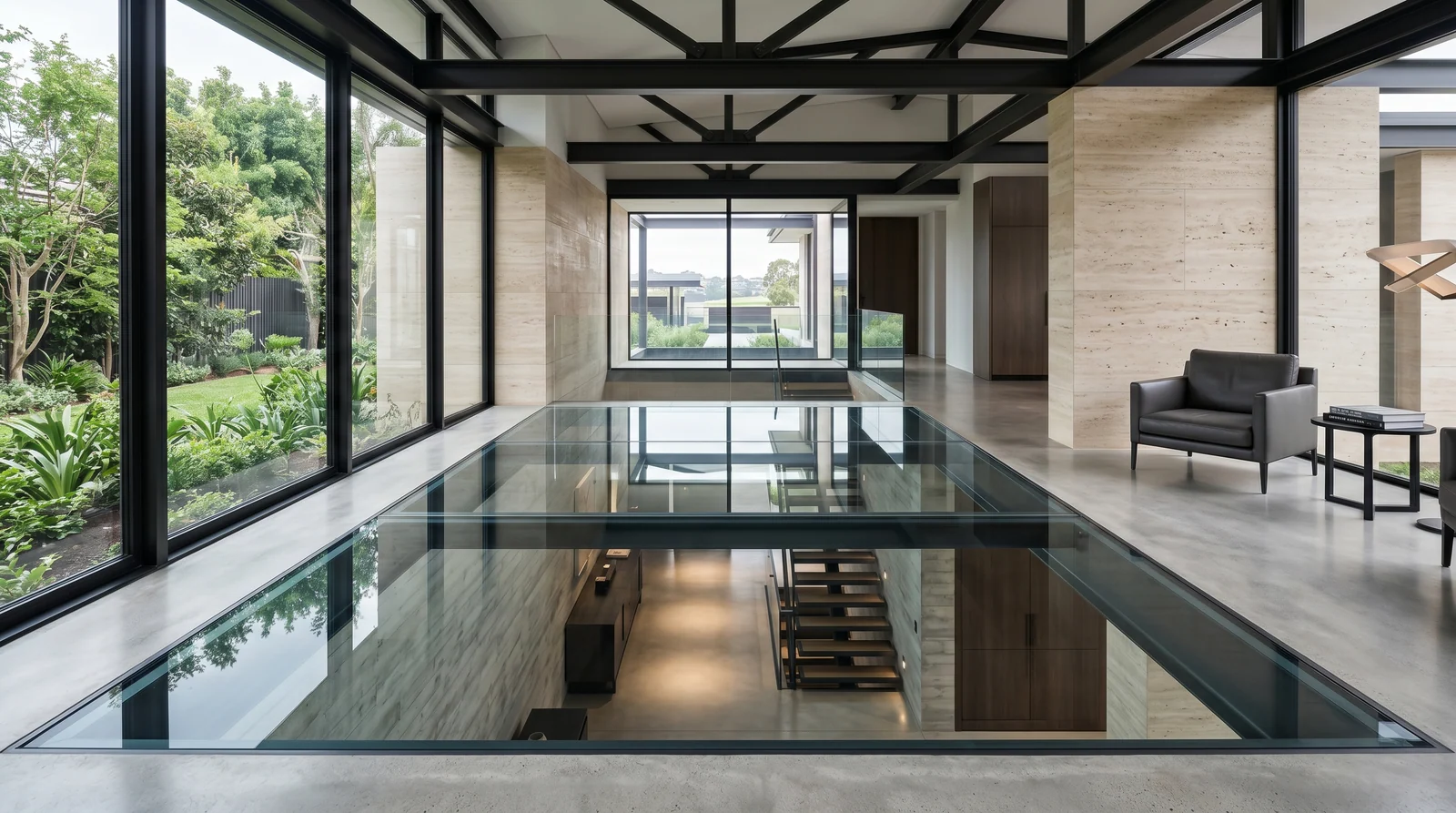
A Smart Glass floor is a laminated assembly with PDLC film between glass layers. No 60 V → opaque. 60 V → transparent. Solves a specific problem: show or hide the space underneath on demand.
01How it works
Between two 8 mm laminated panels sits a 0.3 mm PDLC film. Top sheet 10 mm with anti-slip. Total package 26 mm. Voltage aligns LC molecules → transparent. No voltage → scattered light → opaque.
02Use cases
- Over a wine cellar in a luxury home — opaque by day, transparent for guests
- Over an under-floor aquarium
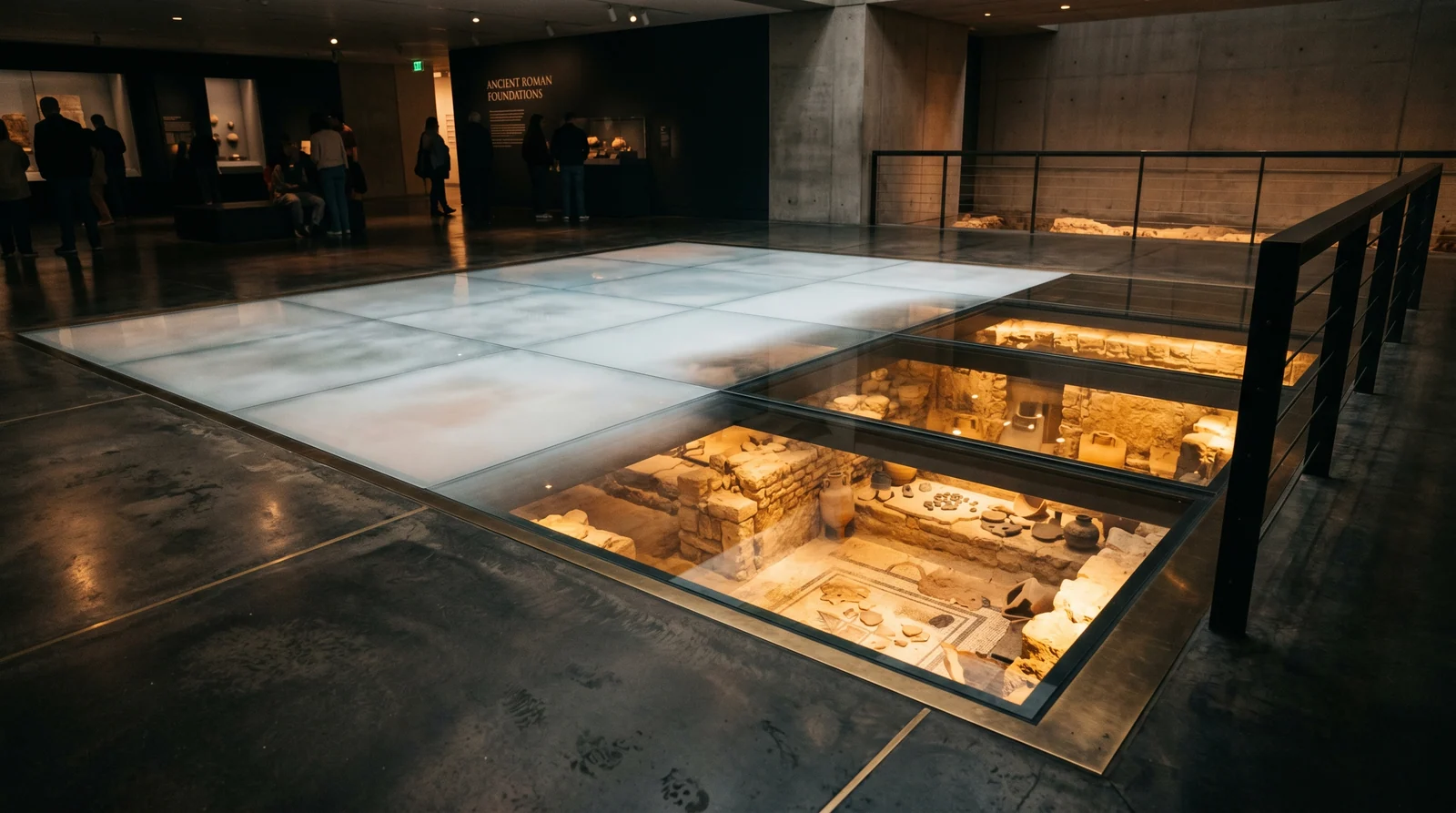
- Over a museum exhibit — pop-up reveals
- Pop-up retail with hidden branding
| Area | 2026 price |
|---|---|
| 1 m² | from 124 000 ₽ |
| 2 m² | from 232 000 ₽ |
| 4 m² | from 432 000 ₽ |
| + smart home (HomeKit) | +18 000 ₽ |
| + presence sensor | +22 000 ₽ |
Smart Glass floor isn't "regular floor with a feature" — it's a separate visual move. Used right (wine cellar, design accent) — guests are stunned for decades. Used for show — a half-million-ruble toy nobody uses by year two.
03This service at REAL GLASS
If you've read this far, the topic is probably relevant to a real project. We make glass floors in-house in St. Petersburg, with a measure within 1–3 days, 1-year warranty and a fixed contract price. All numbers in this article come from our actual 2026 quotes.
For a project-specific estimate — see the service page or request a free on-site measure.